The following article originally appeared in CDA Essentials, Issue 4, 2026, p. 24-26. This article is reprinted with permission from the Canadian Dental Association.
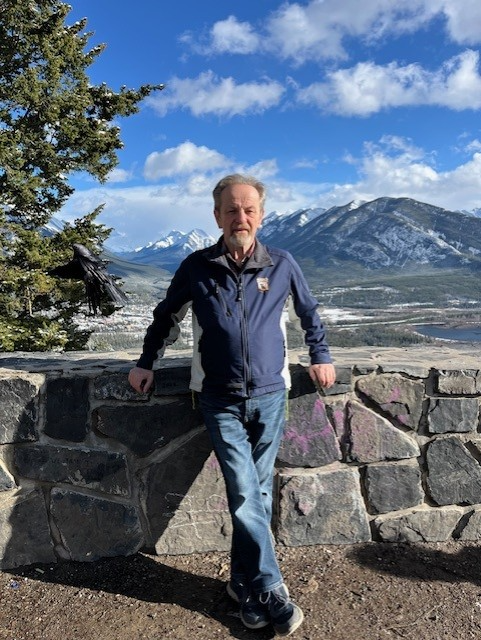
When Melvin Mott walked into a Banff, Alberta, dental office in the summer of 2021, he thought he just needed a tooth pulled. Instead, he got a second chance at life.
“I thought it was a tooth in the back of my mouth,” says Mott. “It was really bothering me. It was painful.” The pain had started on the left side of his jaw and radiated downward. Like many people with dental pain, he searched online for a local dentist and booked an appointment with Dr. Anand Choubal.
Mott expected a straightforward solution to his bad tooth. But Dr. Choubal saw something more concerning.
Mott is a longtime Banff resident who has worked in the hospitality industry for decades. Originally from Brandon, Manitoba, he moved west and built a career in hotels across Western Canada.
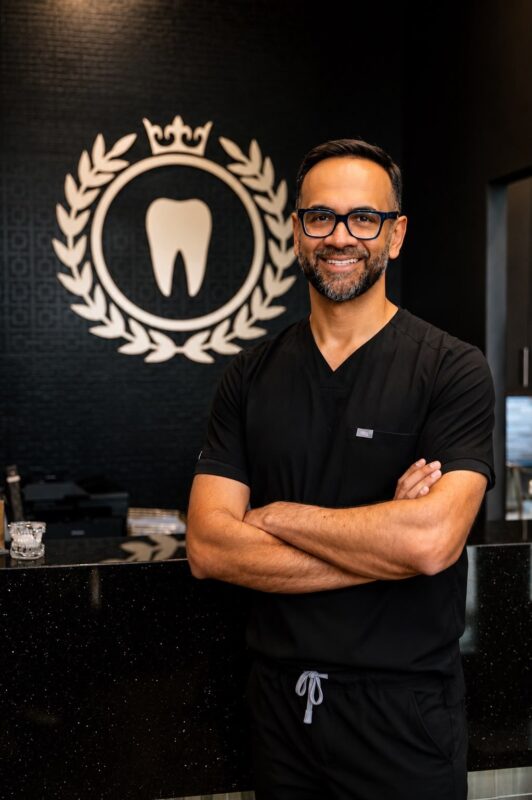
Dr. Choubal is a second-generation dentist originally from Saskatoon, Saskatchewan. He worked as a clinical instructor and in private practice before relocating to Banff in 2006. He is a dentist known for his patient-centred approach to care, particularly for patients with dental anxiety, and has a special interest in sedation dentistry.
Mott expected a straightforward solution to his bad tooth. But Dr. Choubal saw something more concerning. As part of his examination, Dr. Choubal reviewed Mott’s medical history and learned that he had suffered a stroke earlier that year. Then he began asking more questions.
A Closer Look
“He said that from the left side, the molar had pain that was going down his jaw,” says Dr. Choubal. “I’ve seen that. That’s not totally uncommon.” But the conversation continued. “As we were chatting, he revealed that the pain was going down his left arm. Then he told me that the pain was going down both arms.” For Dr. Choubal, that detail set off alarm bells.
“Everybody comes in with a toothache,” he says. “This was the first time somebody told me their tooth pain was going into their arms.” Jaw pain can be a symptom of a cardiac event. Combined with Mott’s recent stroke history, Dr. Choubal began to suspect the pain might not be dental-related at all. “The classic signs of a heart attack are jaw pain and pain down the arm,” he says. “The only symptoms he didn’t have were nausea and sweating.”
Although Mott had a visibly damaged tooth that clearly needed treatment, Dr. Choubal made a difficult decision. “I said, ‘I don’t think I can freeze you. I don’t have a good feeling about this,’” Dr. Choubal says.
“Send Him to the Hospital”
For Mott, the recommendation to go to the ER came as a shock. “I was just numb,” he says. “What’s going on?” At first, he wasn’t convinced that he needed emergency care. “He just wanted relief from the tooth pain,” says Dr. Choubal. “He was disappointed. He’d been dealing with it for a while.” Still, Dr. Choubal persisted. He contacted the Banff hospital and spoke directly with the emergency physician. “I told her my concerns,” he says. “She didn’t hesitate. She told me, ‘Send him down right away.’”
“When I got into emergency, they knew I was coming,” Mott says. “They put me right through. No waiting.” Tests revealed elevated troponin levels, a marker of heart damage. Doctors determined that he had suffered a heart attack and arranged for an ambulance transfer to Foothills Medical Centre in Calgary.
“The emergency doctor came in and said, ‘We’re transporting you to Calgary,’” Mott says. The almost 100-kilometre ambulance ride from Banff to Calgary was a blur. “It was just like, what’s going on?” Mott says. “You’re laying there in the back of the ambulance and everything’s happening so fast.”
In Calgary, physicians discovered severe blockages in Mott’s coronary arteries. “When I talked to my cardiologist and the doctors at emergency, they all said the same thing,” Mott says. “If Dr. Choubal didn’t catch it, there was a very good chance I wouldn’t be here today. They told me that my dentist saved my life.” Specialists treated Mott by placing a coronary stent, and Mott went home to Banff.
The Long Road Home
Months later, Mott returned to the dental office to finally address the tooth that had started it all.
During the appointment, he mentioned a new symptom: severe fatigue and shortness of breath when climbing stairs. Again, Dr. Choubal became concerned. “I told him, ‘What if this is the same thing?’”
He again postponed dental treatment and urged Mott to return to his cardiologist. Further testing revealed that the stents had become blocked. Mott would need coronary bypass surgery. “I got lucky,” Mott says. “I had an excellent medical team.”
The procedure was extensive. Surgeons removed a vein from his left leg, from above the knee to the ankle, and used it to bypass blocked arteries in his heart.
Only afterward did Mott fully understand what he had been through. “Thank goodness they didn’t tell me everything before,” he says with a laugh. “If they would’ve told me exactly how they do the surgery, I would’ve been terrified.”
After leaving Calgary, Mott returned to Banff expecting that the worst was behind him. Instead, a new challenge began.
Doctors told him he needed to walk to rebuild his strength, but even that felt overwhelming. For months, every movement required effort. “I was shuffling around in my pajamas and slippers,” he says. “That was about all I could manage.”
At night, he slept in a motorized recliner gifted to him by his employer because lying flat was too painful. The chair helped him stand up when his chest and leg were too weak to support him.
The emotional toll surprised him almost as much as the physical recovery. Later, physicians told him he was experiencing symptoms of post-traumatic stress.
“Every day is precious. “I enjoy waking up every morning.”
“I didn’t think something like that could happen from surgery,” he says. “But you go through depression. You go through loneliness. You’re stuck at home and you can’t do the things you used to do.”
Yet the experience also transformed how he views life. “Every day is precious,” he says. “I enjoy waking up every morning.”
Dr. Choubal no longer practises in Banff, so Mott makes the trip to Calgary for his dental care. Mott says he has found a practitioner he trusts completely. “I told him the other day, I don’t care if you’re hours away,” Mott says. “I’ll take the day off and come and see you. I know I’m in good hands.”
More Than Just Teeth
For 20 years, Dr. Choubal has taken Advanced Cardiovascular Life Support (ACLS) courses, required for IV sedation certification in Canada. For the past seven years, he has been a Heart and Stroke Foundation-certified ACLS instructor.
“Teaching the course annually has likely been the biggest factor in sharpening my ability to detect medical problems and identify Melvin’s cardiac issues,” he says. Mott’s case is unusual, but it is not unique. Since that time, Dr. Choubal has encountered several serious medical emergencies in the dental office.
“Sometimes people come in for a tooth problem, and what’s really happening is something bigger.”
One patient seeking treatment for an infected third molar began showing signs of septic shock during a consultation.
“He started becoming incoherent,” Dr. Choubal says. “His blood pressure, oxygen and heart rate were all highly abnormal.” Recognizing the danger, he immediately called emergency services, who treated the patient with intravenous antibiotics in the ambulance.
On another occasion, a young woman arrived for a third molar consultation and suffered a seizure in the dental chair, dislocating both her shoulder and hip. Emergency crews transported her to hospital for treatment.
Experiences like these have reinforced Dr. Choubal’s belief that dentists can often be the first health care professionals to spot signs of broader medical problems. “Sometimes people come in for a tooth problem, and what’s really happening is something bigger,” he says.
A Different Future
The first time Mott saw Dr. Choubal after his heart surgery, emotions got the better of him.
“It was tough,” he says. “I thanked him. I told him what the doctors had said.” Years later, the gratitude remains.
“I can’t express how grateful I am to Dr. Choubal,” he says. “He saved my life.”
Dr. Choubal, for his part, tends to downplay his role. “I did what any dentist would do, I think,” he says. “I had a bad feeling and so I acted as if it was the worst-case scenario.”
But Mott sees it differently. “He genuinely cares,” he says. “And that made all the difference.”
In the years since his heart attack and bypass surgery, Mott has made it something of a personal mission to share the story. He has contacted local newspapers, radio stations and professional organizations, hoping someone would tell his story.
“I really think Dr. Choubal should get recognition,” Mott says. “He’s a very humble man, but people should know what happened.”
He hopes the story serves as a reminder that dentists are health care professionals whose observations can sometimes have life-saving consequences.
“When somebody saves your life, that’s a good story,” Mott says. “People need a story that makes them smile for a change.”
Need a dentist?
You can find one that works for you by using our Find-a-Dentist tool. Filter by location, specialty, and language.