
By Adrien Watzke
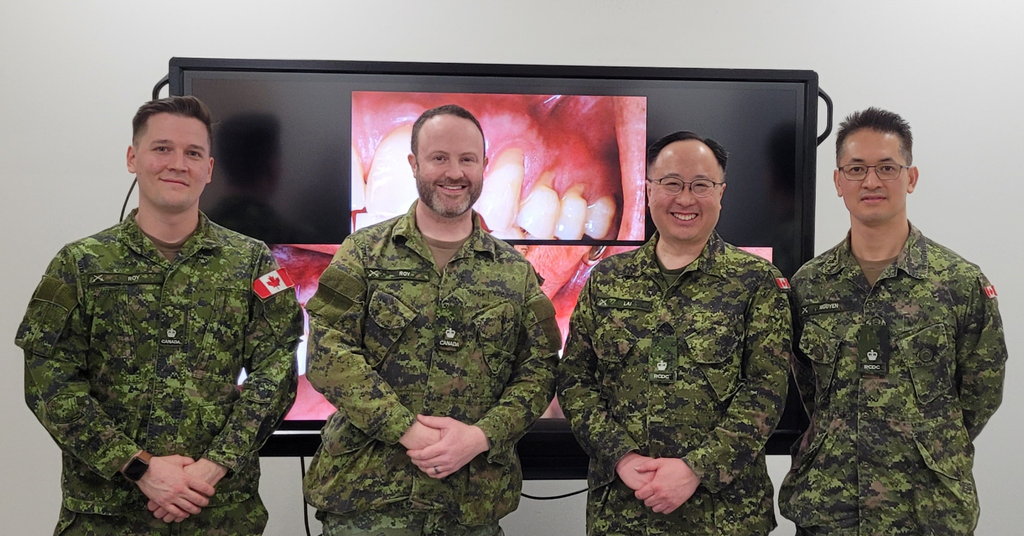
When it came to choosing between a career in dentistry or the military, Major Christopher Bryant Roy CD, DDS, MSc (Periodontics), FRCDC, Dip ABP chose to do both.
Major Roy is currently posted to Canadian Forces Base Edmonton, where he serves as the Western Regional Periodontist for the Royal Canadian Dental Corps (RCDC). In addition to his military duties, he volunteers as a part-time instructor in the graduate periodontology program at the University of Alberta.
“I grew up with a profound desire to belong to something greater than myself.”
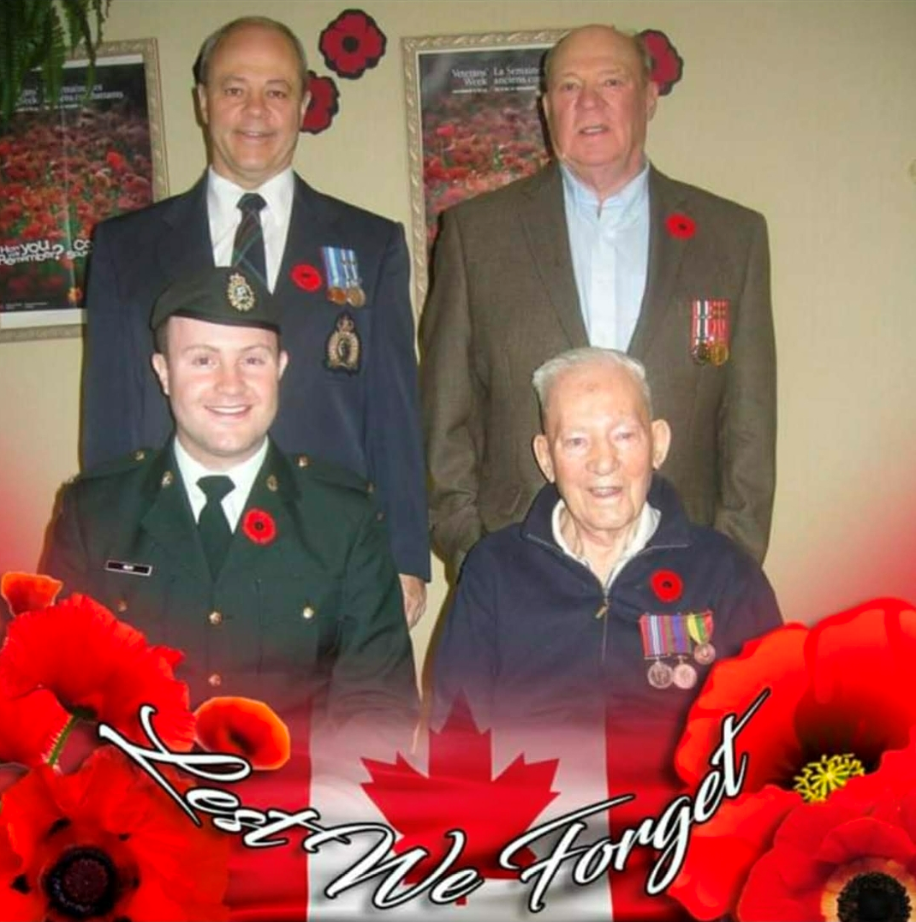
“I signed my contract with the Canadian Armed Forces 20 years ago in March 2006 during my first year of dental school at Western University,” says Major Roy who has combined a career in dentistry with service in the Canadian Armed Forces—a decision rooted in a deep family history of public service. “With a grandfather who served in WWII, an uncle who spent 35 years in the Air Force, and a father who served in the RCMP for over three decades, I grew up with a profound desire to belong to something greater than myself.”
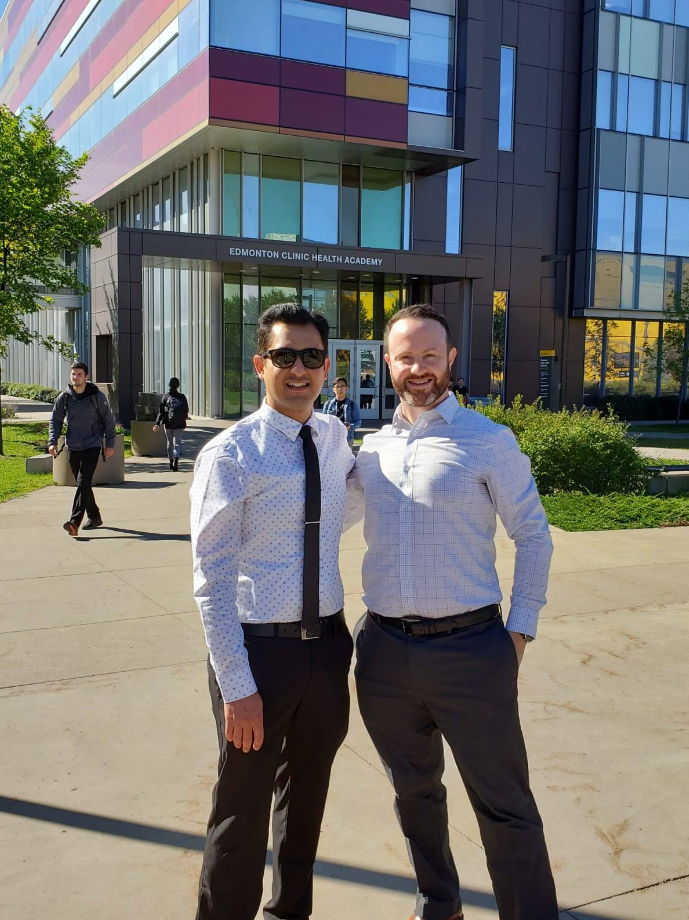
After being mentored by several periodontists in the military, he returned to school and, in 2022, completed a Master of Science in Periodontology at University of Alberta, became a board-certified periodontist, fellow of the Royal College of Dentists of Canada, and diplomate of the American Board of Periodontology.
A Rewarding Path
Major Roy notes that the reasons why his dual path has been so rewarding is the foundation of support and structure; a unique patient-provider bond; and unparalleled career diversity. From a practical standpoint, signing on early meant his dental education was fully funded, allowing him to focus entirely on his studies. Though his introduction to the military at the St-Jean-sur-Richelieu boot camp was a formative experience—rigorous drills, weapons training, and leadership development forged lifelong friendships and instilled the discipline required of a Dental Officer.
“One of the most compelling aspects of practicing in the Forces is the clinical environment and the people,” says Major Roy. “I was struck by the high standard of care made possible by state-of-the-art equipment. More importantly, I discovered a sense of purpose that is difficult to replicate in civilian practice.”
He also speaks fondly about the camaraderie and deep, mutual respect that comes from treating people who put their lives on the line. Mission-driven care and teamwork play an important role as well, with the military adding layers of leadership and physical challenge that round out your character, as he says, “you are never just a dentist; you are an officer.”
Unparalleled Opportunities
What has sustained Major Roy over his two decades of service is the unparalleled career diversity and the sheer variety of roles he has held—from a line dental officer to leading a clinic as a Detachment Commander; developing dental standards and examinations at the Training Centre and later drafting national dental policies; immersing himself in second-language training in Quebec City to better serve his colleagues in French; and being supported in his graduate studies.
“These past 20 years have passed incredibly quickly,” says Major Roy. “The unique opportunities to lead, travel, and specialize have provided a career of service that has been as diverse as it has been fulfilling. While I have not yet deployed overseas, my career has been enriched by extensive participation in training exercises and maneuvers both within Canada and alongside the United States Armed Forces. These experiences, spanning from the operational field to advanced laboratory environments, have been instrumental in my professional development.”
Rising to the Challenge
When asked about the unique challenges of practicing dentistry in a field environment, Major Roy says: “In the field, you aren’t just a clinician; you are an operator. During domestic exercises, I led syndicates tasked with providing comprehensive dental care from the back of a mobile dental truck. This requires a high level of technical and tactical proficiency.”
His responsibilities included positioning generators and organizing instruments and supplies in a confined space; and basic map and compass work to ensure the mobile clinic could navigate and remain functional in shifting operational zones.
“The diversity of these experiences and the unique demands of providing high-level care under operational constraints were the basis of my decision-making processes to pursue specialty training,” he adds.
Despite operating within a military environment, his clinic operations are like a civilian dental practice through its structured, patient-centric approach. Office hours are 7:30 AM to 3:30 PM, Monday to Friday, with an after-hours on-call duty team.
“As the periodontist, I provide treatment that ranges from guided tissue regeneration and implant surgery to routine supportive maintenance.”
Treatment decision-making processes are aligned with the Canadian Forces Dental Care Program, which provides a template to promote oral health, prevent orofacial illness and disease, and prepare members for operational duties.
“The core of my daily operations remains focused on delivering high-level, specialized surgical and therapeutic outcomes comparable to any specialty care clinic,” says Major Roy. “Further, we integrate specific military requirements, such as allotted time for physical conditioning to meet our annual physical fitness test.”
While Major Roy manages a standard clinical scope, he does see unique cases stemming from operational injuries, including: chipped or fractured teeth resulting from falls while on parade or blunt force trauma during physical training; issues such as temporomandibular disorder and bruxism sequelae (fractured teeth) often linked to the high-stress nature of service; and being very aware of a member’s specific trade when planning treatment.
“If a member is active aircrew or a diver and requires a sinus lift, I must implement ground or diving restrictions to prevent post-surgical complications caused by pressurized cabins or underwater environments,” he remarks.
Passing on Knowledge
In addition to ensuring the dental fitness of the Forces members serving on base, on exercise, and/or operations, Major Roy has instructed on the Clinical Periodontics Course annually for the past four consecutive years at the Canadian Forces Health Services Training Centre (CFHSTC) in Borden, Ontario. As the primary training establishment for the Canadian Forces Medical Service and the Royal Canadian Dental Corps (RCDC), CFHSTC delivers four two-week hands-on dental clinical courses yearly – Periodontics, Oral Surgery, Prosthodontics, and Endodontics – and two administrative and leadership dental officer development courses (Basic and Advanced Dental Officer Courses).
“I find these sessions incredibly rewarding, as they offer unique opportunities for collegiality and networking with other dental officers across the RCDC,” says Major Roy.